


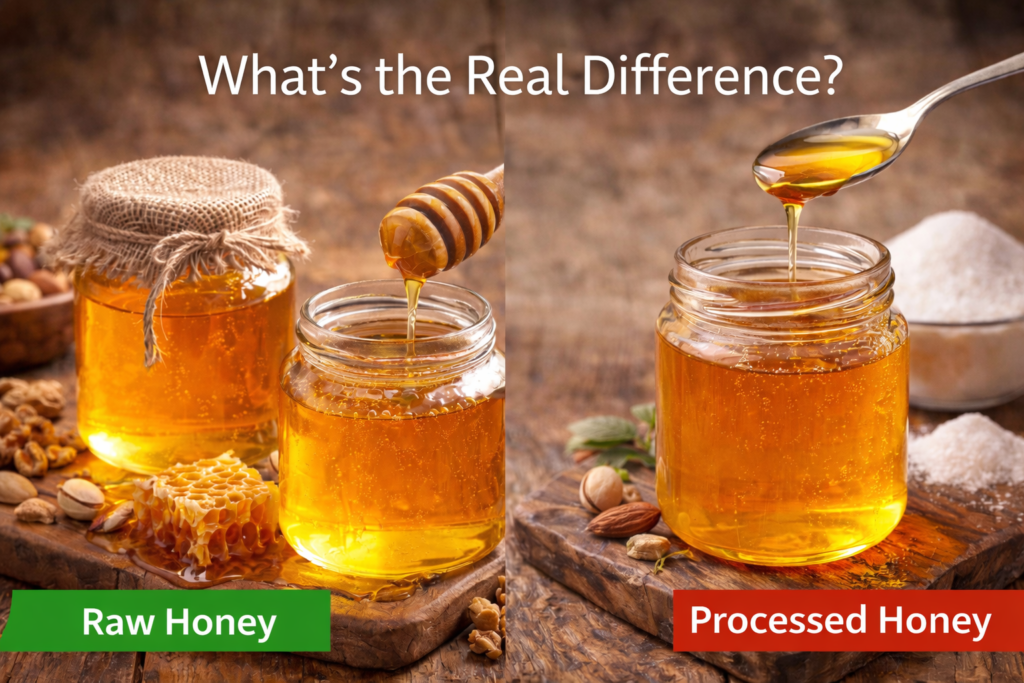
Raw vs Processed Honey: What’s the Real Differe…
Honey is one of nature’s most loved sweeteners, known for its taste and health benefits. However, not all honey is the same. When
choosing honey, you often come across two main types—raw honey and processed honey. Understanding the difference between them can help you make healthier and more informed choices.
Let’s explore how raw and processed honey differ and which one is better for you.
What Is Raw Honey?
Raw honey is honey in its purest and most natural form. It is collected directly from the beehive, gently strained, and packed without heavy heating or chemical treatment. This minimal processing helps preserve its natural enzymes, antioxidants, pollen, vitamins, and minerals.
Raw honey retains its original flavor, aroma, and texture. It may appear cloudy, thick, or crystallized over time—these are natural
signs of purity.
What Is Processed Honey?
Processed honey is honey that has been heated, filtered, and refined before being packaged. During processing, it is exposed to high temperatures to improve appearance, delay crystallization, and increase shelf life.
While this makes honey look clear and smooth, it also removes many natural nutrients and beneficial compounds. Some processed honey may also contain added sugar syrups or artificial sweeteners.
Key Differences Between Raw and Processed Honey
| Feature | Raw Honey | Processed Honey |
| Processing | Lightly strained, unheated | Heavily heated and filtered |
| Nutrients | Rich in enzymes and antioxidants | Reduced nutritional value |
| Texture | Thick, cloudy, may crystallize | Clear, smooth, rarely crystallizes |
| Taste | Natural, floral, rich | Mild, uniform, less complex |
| Health Benefits | High | Limited |
| Shelf Life | Natural preservation | Extended artificially |